Vietnam Ride-Hailing Apps: Grab vs Xanh SM (2026)

Getting around Vietnam usually comes down to choosing between two ride-hailing apps: Grab and Xanh SM. Many travellers aren’t sure how to get from the airport to their hotel, or which payment method to use. This guide, written from a resident’s perspective, covers how to pick the right app, how fares work, and what to do if something goes wrong.
Which Ride-Hailing Apps Work in Vietnam?
The two ride-hailing apps most widely used in Vietnam are Grab and Xanh SM. It’s worth installing one — or both — on your phone as soon as you arrive.
Here are the main apps you’ll encounter locally.
- Grab: A super-app used across Southeast Asia for ride-hailing and delivery. Alongside car and motorbike-taxi bookings, it also handles food delivery.
- Xanh SM: A Vietnam-based ride-hailing service known for running an all-electric-vehicle (EV) fleet.
- Other apps: Which apps are available, and what they cover, can change over time. Check the app store for the latest availability before you travel.
For more on the delivery and ride-hailing ecosystem behind these apps, see How Vietnam’s Food Delivery Market and Ride-Hailing Apps Have Evolved and The State of Vietnam’s Food Delivery Market Today. Reading both will give you a fuller picture of how transport and delivery services fit together in Vietnam.
You’ll need a local internet connection to use any of these apps. To make sure you’re online the moment you land, check out 5 Recommended SIM Cards for a Comfortable Trip to Vietnam and set up a SIM or eSIM before you arrive.

What’s the Difference Between Grab and Xanh SM?
Vehicle type and coverage area differ between the two. Checking the in-app details before you book will make things easier on the day.
Here’s a rough comparison:
| Category | Grab | Xanh SM |
|---|---|---|
| Vehicle type | Rides available across several vehicle classes | All-electric-vehicle (EV) fleet |
| Coverage | Mainly urban centres across Southeast Asia | Mainly major cities within Vietnam |
| Services | Rides plus food delivery and other services | Focused mainly on ride-hailing |
| Payment | Check the app for current options | Check the app for current options |
Treat this as a general guide only — always confirm the latest details in the app itself, since services and coverage areas keep changing.
If you want to compare ride-hailing against other ways of getting around Vietnam, see The Complete Guide to Getting Around Vietnam (2025 Edition), which covers trains, buses, and other options alongside ride-hailing apps.

How Should You Choose Fares and Payment Methods?
Ride-hailing fares are calculated automatically within the app, based on distance and time of day. Most apps accept both cash and card, so it’s worth setting up your preferred payment method in advance.
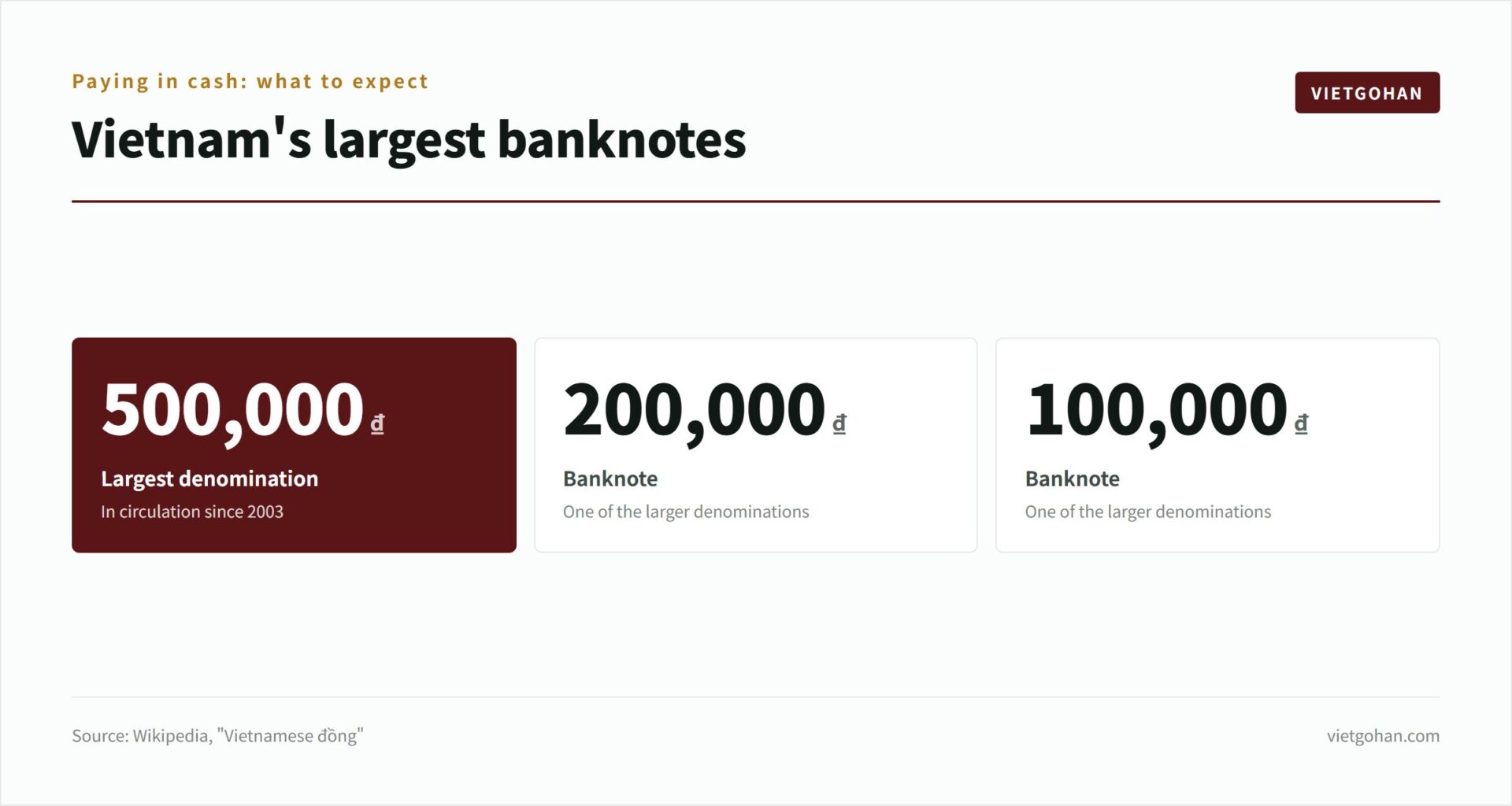
If you plan to pay in cash, you’ll need Vietnamese đồng (VND) notes on hand. Vietnamese banknotes range from 1,000₫ up to 500,000₫.
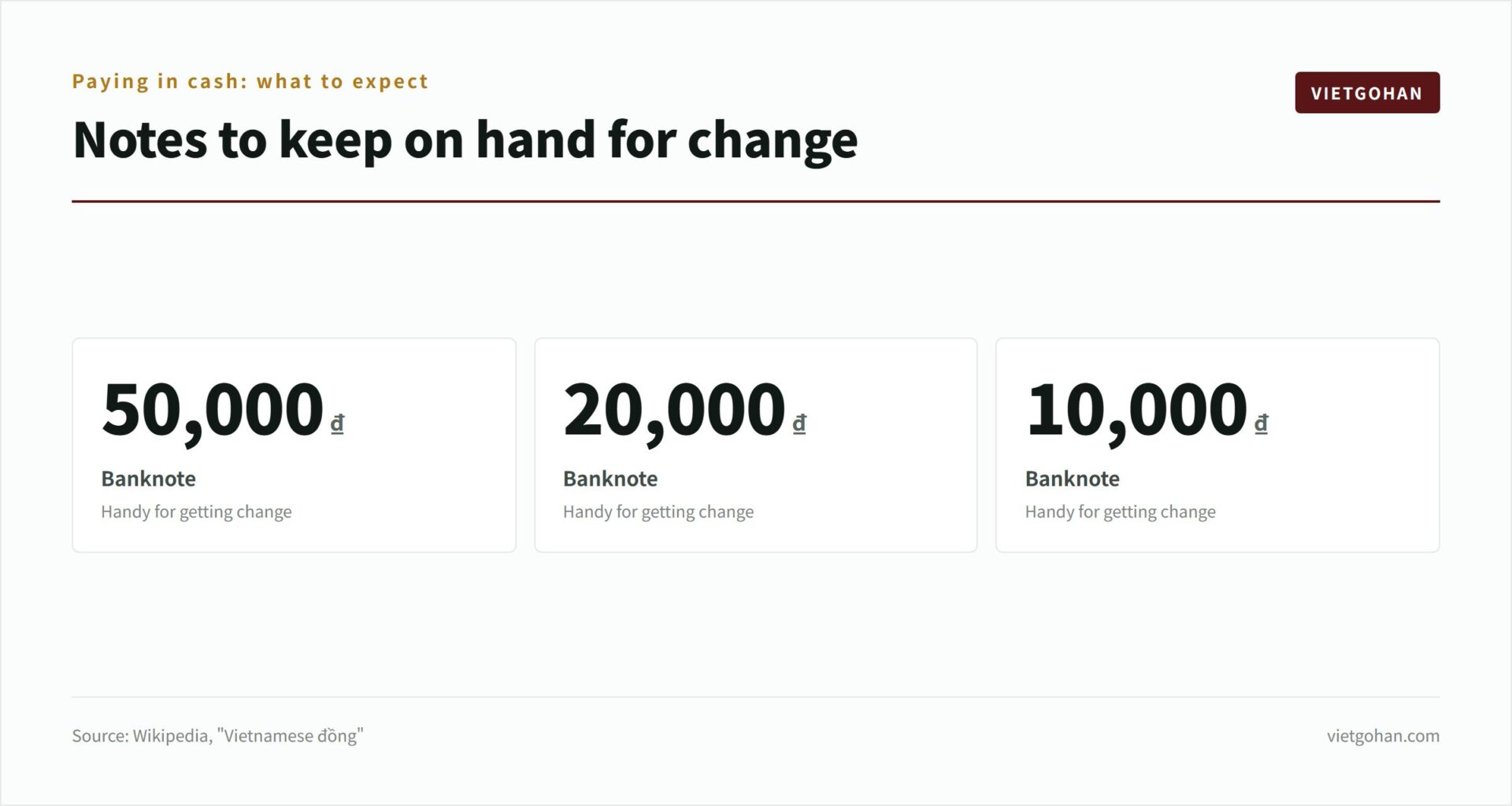
It helps to carry small-denomination notes as well as large ones, so drivers can give you change easily.
Keep in mind that the VND exchange rate fluctuates. As of February 28, 2026, one US dollar was worth 26,045 đồng. Rates shift depending on when and where you exchange money, so treat this only as a rough guide.
If you’d rather pay by card, the standard approach is to register a credit card in the app ahead of time. For details on how well internationally issued cards work and what to watch for security-wise, see Can You Use a Credit Card in Vietnam? The Complete Guide to Cash vs. Card. It’s worth reading before you decide how to split your spending between cash and card.
What Should You Know About Using Ride-Hailing Apps at the Airport?
Many airports have a designated pickup zone for ride-hailing apps. Always check the signage in the arrivals hall before requesting a ride.
Here’s a general idea of what to expect after you land:
- Before leaving the arrivals hall, look for signage pointing to the ride-hailing pickup area.
- Walk to the designated pickup zone before requesting a ride in the app.
- If you’re travelling with a lot of luggage, factor in seat count and trunk space when choosing your vehicle type.
- Always confirm your driver’s exact meeting point on the map inside the app.
Pickup rules and signage vary by airport, so following the most current local instructions is the safest approach.
Demand for ride-hailing apps in Vietnam is reportedly growing. For a broader look at the country’s economic trends, see Vietnam’s Economy in 2026: Key Trends, Growth Forecasts, and Major Industries, which helps explain why transport services keep expanding.

What Should You Do If Something Goes Wrong?
If there’s a mix-up with your driver, or you have a question about your fare, the app’s built-in support feature is the first place to go. Working through the app — where there’s a record of the conversation — is generally safer than negotiating in person.
A few ways to avoid trouble in the first place:
- Before you get in, double-check that the destination pin is placed at the correct location.
- If you need to communicate with your driver, keep a few basic English or Vietnamese phrases ready.
- If you have questions about the fare or route, contact the in-app chat or support desk.
- Check your connectivity in advance so you don’t lose your internet connection mid-ride.
If you’re not confident communicating with local staff or drivers, Vietnamese Phrases for Ordering at Restaurants is a useful reference. Even a handful of basic phrases can make everyday interactions much smoother.
For more on how far Vietnam’s delivery and ride-hailing economy has come, see Vietnam’s Booming Food Delivery Market: 5 Apps Driving Its Growth. Understanding the wider app economy makes it easier to judge situations when something does go wrong.

Frequently Asked Questions
Can I pay for Grab rides with an international credit card?
Card support is best confirmed directly in the app, since accepted card types can vary by account. Registering your card ahead of time means you won’t have to deal with it once you’re already at the pickup point.
Can I book Xanh SM in English?
Multi-language support has been expanding across ride-hailing apps in Vietnam. Check the official app for the current language options available in your area.
Do I need a SIM card to use ride-hailing apps?
Yes — these apps assume you have a working internet connection, so it’s worth arranging an eSIM or a physical SIM card before you arrive in the country.
Where do I call a ride-hailing app from the airport?
Follow the signage in the arrivals hall and request your ride only once you’ve reached the designated pickup zone, rather than requesting one straight off the plane.
What should I do if the fare seems higher than expected?
Check the fare breakdown inside the app first. If anything still looks off, contact the in-app support desk rather than negotiating with the driver directly.
Is Gojek still available in Vietnam?
Service availability changes over time, so check the app store for the most current information before relying on it for your trip.
Summary
Getting around Vietnam mostly comes down to switching between Grab and Xanh SM depending on the situation. Fares shift with distance and time of day, and most rides accept both cash and card, so a little preparation goes a long way. At the airport, follow the signage to the designated pickup zone, and lean on the in-app support feature if anything goes wrong. Don’t forget to sort out your connectivity and payment methods before you set off.
Image Credits
- Photo: Tuan Vy / Pexels
- Photo: Tường Chopper / Pexels
- Photo: dongfang xiaowu / Pexels
- Photo: FOX ^.ᆽ.^= ∫ / Pexels