Beyond Pho: 10 Local Vietnamese Noodle Dishes You Must Try [Regional Guide]
Most visitors to Vietnam know pho, but the country’s noodle culture runs far deeper than this one famous dish. From spicy broth bowls in the ancient royal capital of Hue to dry-style noodles found only in Hoi An, every region of Vietnam has its own noodle identity. This guide introduces 10 must-try Vietnamese noodle dishes, organized by region, so you can eat like a local no matter where you travel.
1. Understanding Vietnamese Noodles: The Basics
Vietnamese noodles fall into four main categories: pho (flat rice noodles), bun (round rice noodles), mi (egg-based wheat noodles), and banh canh (thick tapioca noodles). The broth, toppings, and condiments vary dramatically by region, so the same noodle type can taste completely different in Hanoi versus Ho Chi Minh City.
One key thing to know: Vietnamese noodle dishes are typically served with a plate of fresh herbs and vegetables on the side. Bean sprouts, lime, basil, and chili are common accompaniments – you add them to your bowl as you eat. It’s part of the experience.
2. Northern Vietnam (Hanoi & Hai Phong)
Pho Bo (Beef Pho)
Vietnam’s most iconic dish originated in the north. Hanoi-style pho features a crystal-clear beef bone broth seasoned simply with star anise and ginger. It’s lighter and less sweet than the southern version, and typically served with fewer toppings.
Bun Cha
A Hanoi lunch staple. Grilled pork patties and slices are dunked in a slightly sweet, vinegary dipping broth and eaten with round bun noodles and fresh herbs on the side. Made internationally famous when former US President Obama was photographed eating it at a Hanoi street stall.
Banh Da Cua
Hai Phong’s distinctive reddish-brown flat noodles served in a rich crab-based broth. Earthy, savory, and deeply satisfying, this is a dish you can only truly appreciate in Hai Phong itself.
3. Central Vietnam (Da Nang, Hoi An & Hue)
Bun Bo Hue
The bold, spicy noodle soup from the former royal capital of Hue. The broth is made with beef and pork bones and flavored with lemongrass, fermented shrimp paste, and dried chili, giving it a complex heat that pho simply doesn’t have. Thick round noodles and generous toppings of beef shank and pork knuckle make this a filling and unforgettable dish.
Mi Quang
A Da Nang specialty, mi quang is served with just a small amount of turmeric-tinted broth that functions more like a sauce. Topped with pork, shrimp, peanuts, and a crispy rice cracker, it’s unlike any other Vietnamese noodle dish and beloved by locals.
Cao Lau
Found only in Hoi An. The thick, chewy noodles are said to be made using water from a specific ancient well in the Old Town, which is why this dish can’t be replicated elsewhere. Topped with char siu pork, crispy croutons, and fresh greens, it’s a must-eat.
4. Southern Vietnam (Ho Chi Minh City & Mekong Delta)
Hu Tieu
A southern breakfast and lunch staple, hu tieu features clear broth with springy noodles topped with pork, shrimp, and sometimes offal. It can be served wet (with broth) or dry (with sauce), and is widely available at roadside stalls from early morning.
Banh Canh
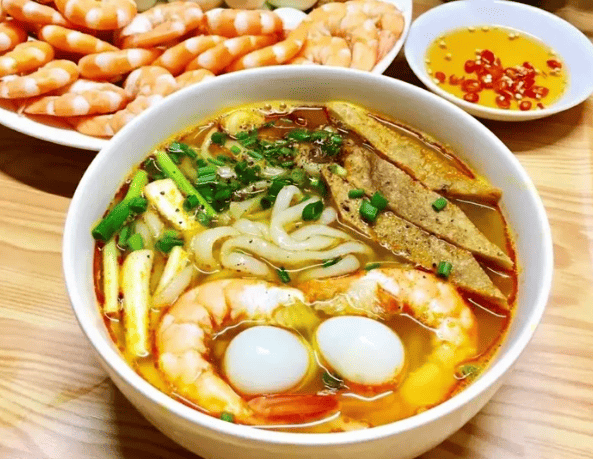
Thick, udon-like noodles made with tapioca starch. They have a pleasantly chewy, slightly gelatinous texture and pair well with rich crab or pork broth. A comfort food favorite across southern Vietnam.
Bun Mam
Not for the faint-hearted, bun mam is a fermented fish soup noodle dish from the Mekong Delta. The pungent, deeply savory broth is loaded with a variety of proteins and vegetables. It’s an acquired taste, but one of the most authentically southern Vietnamese dishes you’ll encounter.
Tips for Ordering Noodles in Vietnam
Don’t be intimidated by the language barrier. Pointing at your neighbor’s bowl and saying ‘same, please’ works perfectly well at most local spots. If you want to go further, knowing the name of the dish and the size (nho/small or lon/large) is usually enough. Venture into local canteens and street stalls rather than tourist restaurants – the food is fresher, cheaper, and more authentic.
(Photo by Unsplash.com)