What Is Che? A Complete Guide to Vietnam’s Local Sweet: Types, Prices & Where to Eat
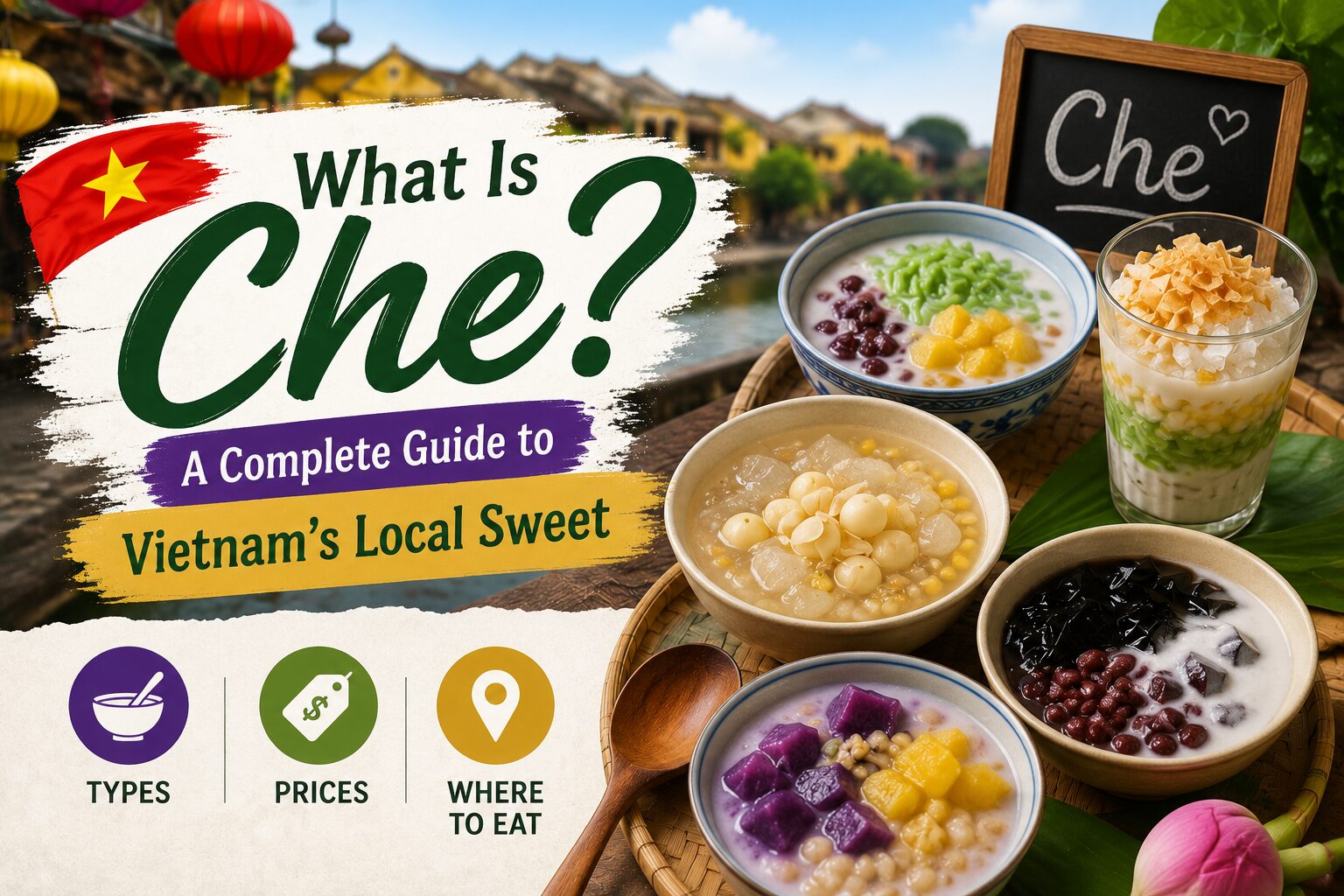
In short, che is Vietnam’s signature sweet—a cup combining beans, jelly, fruit, and tapioca with coconut milk or sweet syrup. At just 10,000–15,000 VND (about US$0.40–0.60), it’s cheap, and in the July–August heat a cold, iced che is the perfect reward. This guide covers the classic types of che, prices, where to eat it, and how to choose by season.
Note: Prices vary by shop and ingredients.
What is che?
Che is a Vietnamese sweet—a little like a sweet bean soup or pudding—combining beans, agar, jelly, fruit, and tapioca with coconut milk or sweet syrup. It comes both cold (with crushed ice) and warm (with ginger syrup), and you can mix and match the toppings. Colorful and beloved as an everyday treat, it’s part of daily street life. For the wider food context, see the history and traditions of Vietnamese cuisine.
What types of che are there?
The classics include che ba mau (three-color), che chuoi (banana), and che Thai (fruit). Endless variations come from mixing the toppings.
| Type | Main ingredients | Notes |
|---|---|---|
| Che Ba Mau (three-color) | Red kidney beans, mung beans, green jelly + ice & coconut milk | The classic; vivid and colorful |
| Che Chuoi | Banana, tapioca pearls, coconut milk | Gently sweet; a grilled-banana version too |
| Che Thai | Jackfruit, durian and other fruit + coconut | Fruit-cocktail style; less sweet |
| Che Troi Nuoc | Glutinous rice balls, ginger syrup | Served warm; comforting |
| Che Khuc Bach | Lychee, jelly | Cool and refined |
How much does che cost?
Che is typically 10,000–15,000 VND (about US$0.40–0.60) per cup, cheapest at street stalls.
Cafes and eateries can charge 1.5–2x more. For the best value, head to market food courts and street stalls. It’s often sold in takeaway bags too.
Where can you eat che?
You can find che at street stalls, market food courts, dedicated che shops, and dessert cafes. Popular spots like “Be Che” in the food court of Ben Thanh Market in Ho Chi Minh City make a perfect sightseeing break. For more standout sweets and dishes, see the top 10 must-try Vietnamese foods.
Which che is best in hot weather?
In the July–August heat, a cold, iced che—such as che ba mau or che Thai—is the way to go.
Cold coconut milk gently cools you down. On cooler days or in the evening, the warm che troi nuoc with ginger syrup hits the spot. Choosing by mood and weather is half the fun of che.
Klook.comFrequently Asked Questions (FAQ)
What is che?
A Vietnamese sweet—like a sweet bean soup or pudding—made from beans, jelly, fruit, and tapioca with coconut milk or sweet syrup.
How much does che cost?
About 10,000–15,000 VND (US$0.40–0.60) per cup at stalls. Cafes and eateries cost a bit more.
Is che served cold or warm?
Both. Cold, iced versions are popular in summer, while warm versions with ginger syrup suit cooler days and evenings.
What is the most popular che?
Che ba mau (three-color) is the classic favorite, known for its red beans, mung beans, and green jelly.
Where can you buy che?
At street stalls, market food courts, dedicated shops, and dessert cafes. Stalls are the most affordable.
Is che vegetarian-friendly?
Many versions are plant-based (beans, fruit, coconut milk), but it depends on the ingredients—check if you’re unsure.
Conclusion
Che is Vietnam’s everyday sweet, enjoyable for well under a dollar a cup. With plenty of types—che ba mau, che chuoi, che Thai and more—and both cold and warm versions, there’s one for every mood and forecast. It’s easy to grab at stalls and markets, so on a hot July–August day, go find your favorite cup.