Thailand vs. Vietnam: Foreign Property Purchase Rules and Investment Strategies
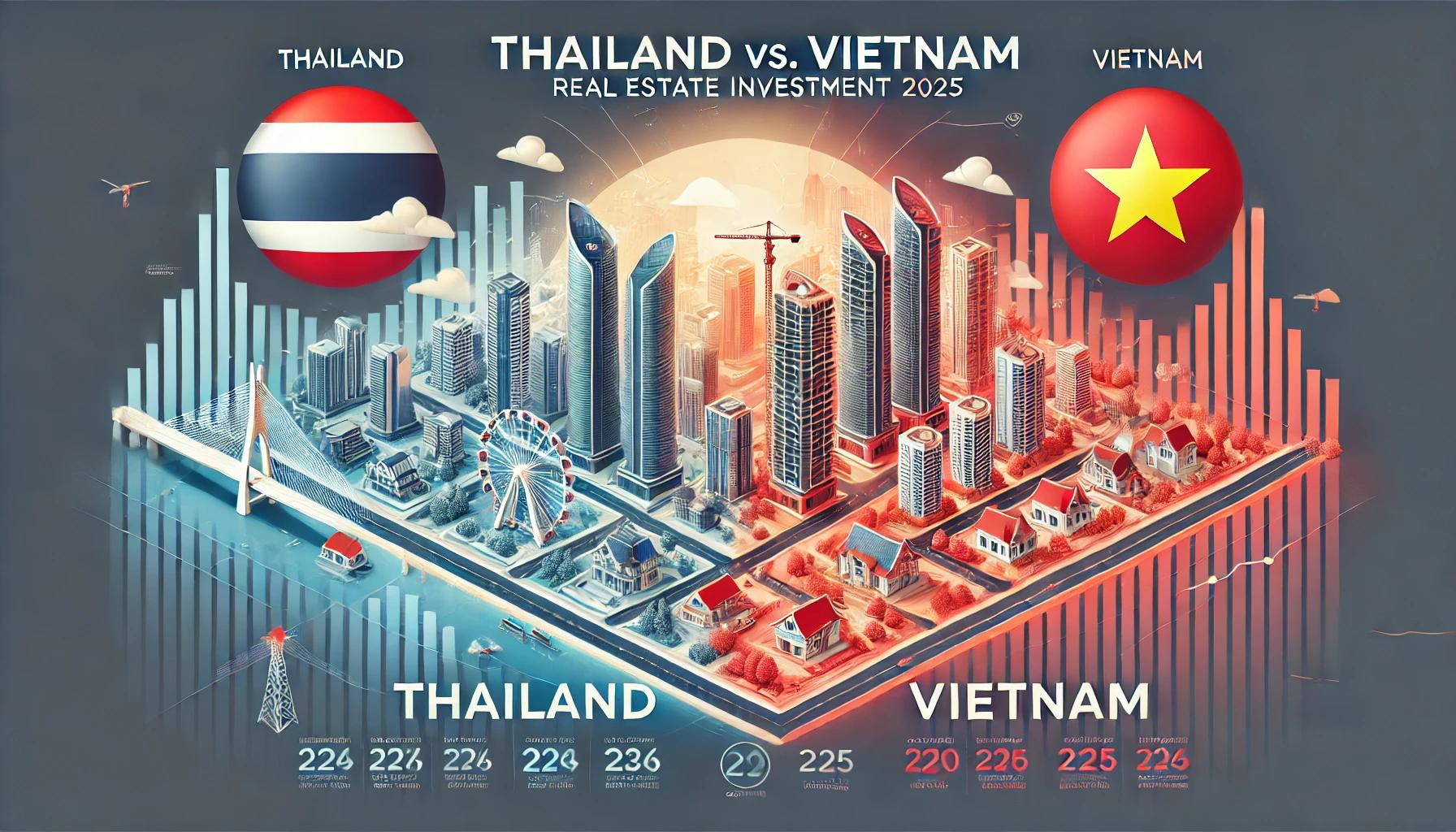
Southeast Asia has become a hotspot for real estate investment, attracting investors from around the world. Among the top contenders, Thailand and Vietnam stand out due to their fast-growing economies and infrastructure development. However, foreign property purchase regulations differ between the two countries, and each market has unique investment opportunities. This article provides a detailed comparison of Thailand and Vietnam’s property purchase rules and key investment strategies.
1. Foreign Property Purchase Rules: Thailand vs. Vietnam
Thailand’s Property Purchase Rules
✔ Foreigners can own condominiums: Foreign ownership is allowed up to 49% of a condominium building.
✔ Land ownership is restricted: Foreigners cannot own land but can lease it for up to 30 years (renewable).
✔ Limited mortgage options for foreigners: Some banks offer loans, but approval is difficult.
✔ BOI (Board of Investment) exceptions: Some foreign companies may own land under specific investment conditions.
Vietnam’s Property Purchase Rules
✔ Foreigners can own condominiums: Foreign ownership is limited to 30% of units in a new development.
✔ Land ownership is not allowed: All land is state-owned and can only be leased for up to 50 years (renewable).
✔ Few mortgage options for foreigners: Most foreign buyers must purchase property with cash.
✔ Commercial property restrictions: Foreign investors are restricted in purchasing commercial real estate.
Conclusion: Thailand offers more flexible property ownership options for foreigners compared to Vietnam.
2. Current Real Estate Market and Growth Potential
Thailand’s Real Estate Market
- Bangkok and Phuket property prices are steadily rising.
- Strong demand from foreign investors keeps the rental market active.
- Government infrastructure projects (such as new rail lines) boost suburban property value.
- Economic stability makes Thailand an attractive long-term investment destination.
Vietnam’s Real Estate Market
- Ho Chi Minh City and Hanoi condominium prices are surging.
- Increased FDI (Foreign Direct Investment) fuels market growth.
- Growing demand for housing due to a young population and urbanization.
- Regulatory changes may impact foreign investment policies.
Conclusion: Vietnam has higher growth potential, but Thailand offers more stability.
3. Top Investment Areas and Property Types
Top Investment Areas in Thailand
✔ Bangkok – High rental demand in the business district.
✔ Phuket – Popular resort destination with strong short-term rental potential.
✔ Pattaya – Large expat community with diverse property options.
✔ Chiang Mai – Increasing demand for long-term living.
Top Investment Areas in Vietnam
✔ Ho Chi Minh City (District 7 & 2) – Preferred by foreign investors.
✔ Hanoi (West Lake area) – High-end residential market.
✔ Da Nang – Rapidly developing resort city.
✔ Nha Trang – Increasing tourism-driven property demand.
Conclusion: Thailand is better for stable rental income, while Vietnam offers higher appreciation potential.
4. Risks and Key Considerations for Investors
Risks in Thailand
- Government policy changes may affect foreign ownership limits.
- Highly competitive market with moderate ROI in some areas.
- Rental market saturation in major cities.
Risks in Vietnam
- Strict regulations on foreign ownership may change over time.
- Possible property bubble in high-demand areas.
- Market immaturity poses legal and regulatory risks.
Conclusion: Thailand is more stable in terms of regulations, but Vietnam presents high-risk, high-reward opportunities.
5. Conclusion: Which Country Offers the Best Investment Opportunities?
When comparing Thailand and Vietnam’s real estate markets, each has distinct advantages and challenges.
✔ For a stable and well-regulated investment environment, Thailand is the better choice.
✔ For higher growth potential and appreciation, Vietnam offers lucrative opportunities.
✔ Foreign property ownership is easier in Thailand.
✔ Vietnam has lower initial investment costs.
Final Verdict:
- For short-to-medium-term investment, Vietnam’s rapid growth is appealing.
- For long-term, stable investment, Thailand remains the top choice.
Investors should carefully evaluate their objectives and risk tolerance before deciding on the best market for real estate investment.